The Resurgence of Tactility: Why Real Texture Trumps Digital Perfection
![[HERO] The Resurgence of Tactility: Why Real Texture Trumps Digital Perfection](https://images.squarespace-cdn.com/content/v1/65709c5d3811307fc2c8dc79/b4088bf0-b6d7-40bc-be50-9fb87e74a22e/R8V5iF52Hhp.webp)
In the contemporary landscape of high-end real estate and design, a subtle yet profound shift is occurring. We are witnessing a transition away from the sterile, hyper-smoothed "digital perfection" that defined the last decade, moving instead toward a deliberate celebration of materiality. This article explores the aesthetic and psychological necessity of texture in luxury imagery, the cognitive science behind tactile engagement, the technical methodologies required to capture raw materials accurately, and the tangible return on investment (ROI) that authentic photography provides for developers and designers. By moving beyond the "flat" look of standard real estate imagery, we can elevate a property from a mere listing to a sensory narrative.
The pursuit of architectural excellence in South Florida: a market defined by its unique light and ambitious use of stone, wood, and glass: demands a photographic approach that respects the integrity of these materials. As a professional architectural photographer in Miami, my objective is to translate the three-dimensional tactility of a space into a two-dimensional medium without losing the "soul" of the design intent.
Is Digital Perfection Killing the Luxury Narrative?
For years, the industry leaned heavily into HDR (High Dynamic Range) processing that eliminated shadows and smoothed out every "imperfection" in a room. While this created bright, clear images, it also stripped away the very elements that make luxury materials luxurious: the grain of the white oak, the vein of the Calacatta marble, and the subtle undulations in hand-applied plaster. Indeed, when every surface is digitally polished to a uniform sheen, the viewer’s eye finds no place to rest, and the brain struggles to interpret the physical reality of the space.
In contrast, the editorial-magazine style focuses on what we call "honest rendering." This approach acknowledges that shadows provide depth and that texture provides character. In the competitive luxury real estate photography South Florida market, potential buyers are not just looking for square footage; they are looking for a visceral connection to the craftsmanship. If the photography fails to convey the weight of a stone countertop or the softness of a bespoke rug, the luxury narrative collapses into a generic digital facade.
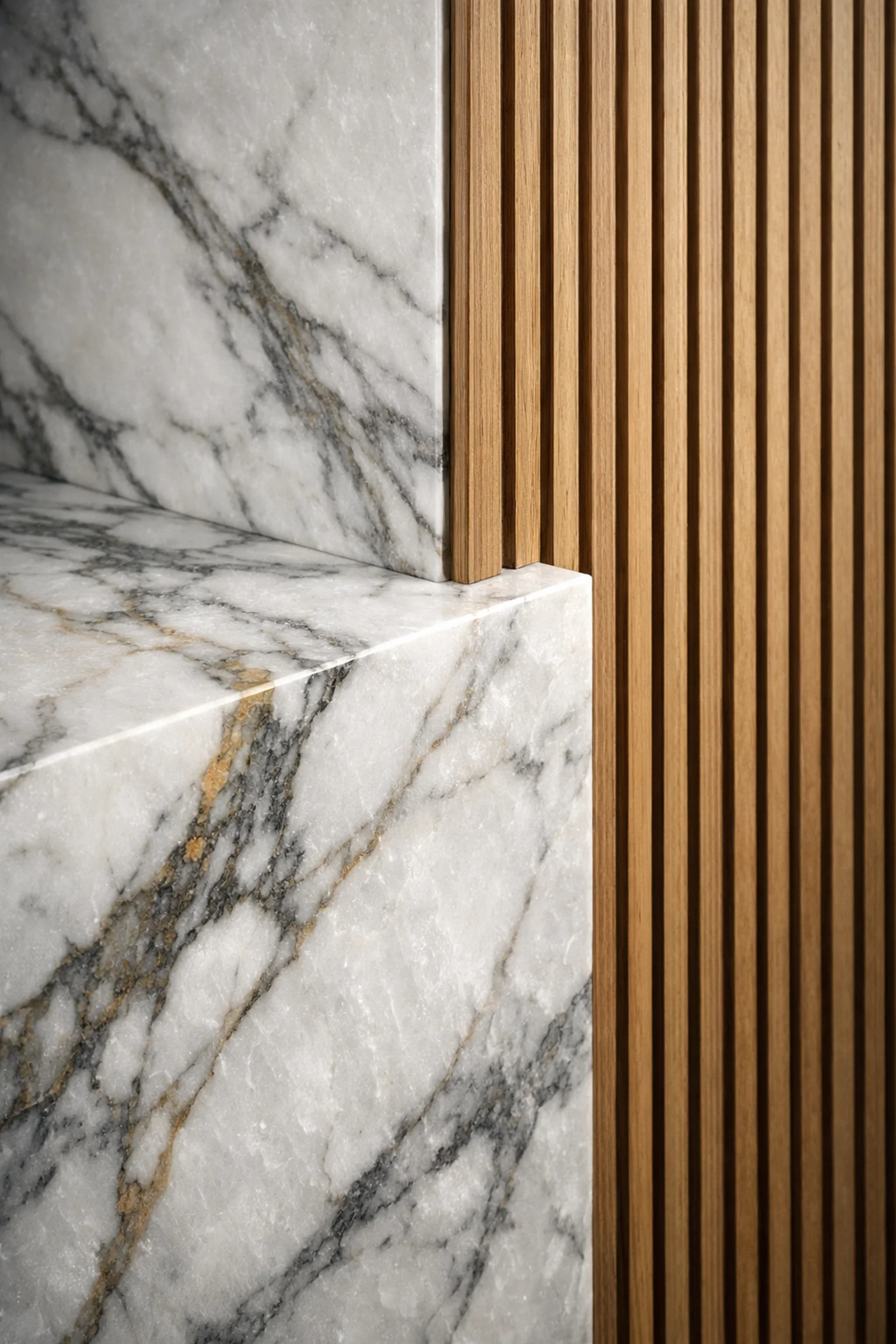
How Does Tactility Influence the Luxury Buyer’s Psychology?
The resurgence of interest in texture is not merely a stylistic whim; it is rooted in human biology. Research into sensory engagement suggests that physical tactile experiences provide emotional and cognitive benefits that digital alternatives cannot replicate.
Research Summary: The Haptic Gap (2025-2026)
Recent industry studies have highlighted that while haptic technology: digital vibrations meant to simulate touch: has advanced, it remains a poor substitute for authentic materiality. Psychologically, humans create stronger neural connections when interacting with textured environments. Touch triggers the release of neurotransmitters that enhance memory formation and spatial awareness. Furthermore, as noted in recent consumer behavior reports (2026), younger demographics like Generation Z are leading a "tactile revival," favoring physical media and raw, organic materials as a response to digital fatigue.
When a prospective client views a portfolio or a listing, their brain "pre-tacts" the space. They imagine the cool temperature of the marble or the warmth of the sun-drenched wood. If the imagery is over-processed and "plasticine," this cognitive connection is severed. By emphasizing texture, an interior design photographer in Florida creates a "sensory portfolio" that allows the viewer to feel the room before they ever step inside it.
Can Lighting Reveal the "Soul" of a Material?
Capturing texture is an exercise in technical precision, particularly regarding the manipulation of light. In the bright, often harsh environment of South Florida, the challenge is to use light not just to illuminate, but to sculpt.
To reveal the grain in wood or the relief in a stone wall, the light must strike the surface at an angle: what we call "raking light." High-end architectural visuals often employ a blend of natural ambient light and meticulously placed artificial strobes to accentuate these details.
Materiality-First Lighting: We identify the "hero material" in a room. If it is a Venetian plaster wall, we position light to catch the trowel marks.
Color Accuracy: Texture is inextricably linked to color. Using professional-grade lighting ensures that the warmth of the walnut or the cool blue-grey of the slate is represented accurately, avoiding the "yellowing" common in lower-end photography.
Lens Selection: While wide-angle lenses are standard for showing a room’s layout, they often distort texture. We frequently use "normal" or short-telephoto lenses to capture vignettes: the small moments where light hits a fabric or a joint: to tell the story of quality.
Why is Materiality the Defining Factor in South Florida High-End Real Estate?
Miami’s architectural identity is currently undergoing a renaissance. We are seeing a shift away from "white-box" minimalism toward a "Warm Minimalism" that relies heavily on organic textures to create a sense of sanctuary. In this context, the role of the Miami interior photography specialist is to document the harmony between the structure and its environment.
Furthermore, with the rise of fashion-branded residences (Fendi, Bentley, Missoni), the materials are the brand. A developer who has spent millions on Italian cabinetry and imported stone expects those investments to be visible in the marketing collateral. Using "cheap" digital techniques that blur these textures is not just a stylistic error; it is a devaluation of the property itself. High-end real estate photography must reflect the high-end budget of the build.
What is the ROI of Authentic Imagery?
From a business perspective, the decision to prioritize editorial-grade, texture-rich photography over mass-market "real estate shots" is a strategic investment in brand perception.
Market Positioning: High-fidelity imagery signals to the market that a project belongs in the top-tier luxury segment. This allows for higher asking prices and attracts a more sophisticated clientele.
Reduced Sales Cycle: When the photography accurately represents the "feel" of a home, there is less cognitive dissonance when the buyer visits in person. The "trust" established by the imagery speeds up the decision-making process.
Designer Longevity: For interior designers and architects, a portfolio that captures the nuance of their material choices is essential for winning future commissions. It demonstrates a level of craftsmanship that generic photography simply cannot convey.
Indeed, the cost of a premium photoshoot is negligible when compared to the value of the assets being sold. A professional interior photography session is an insurance policy against the "commoditization" of a unique design.
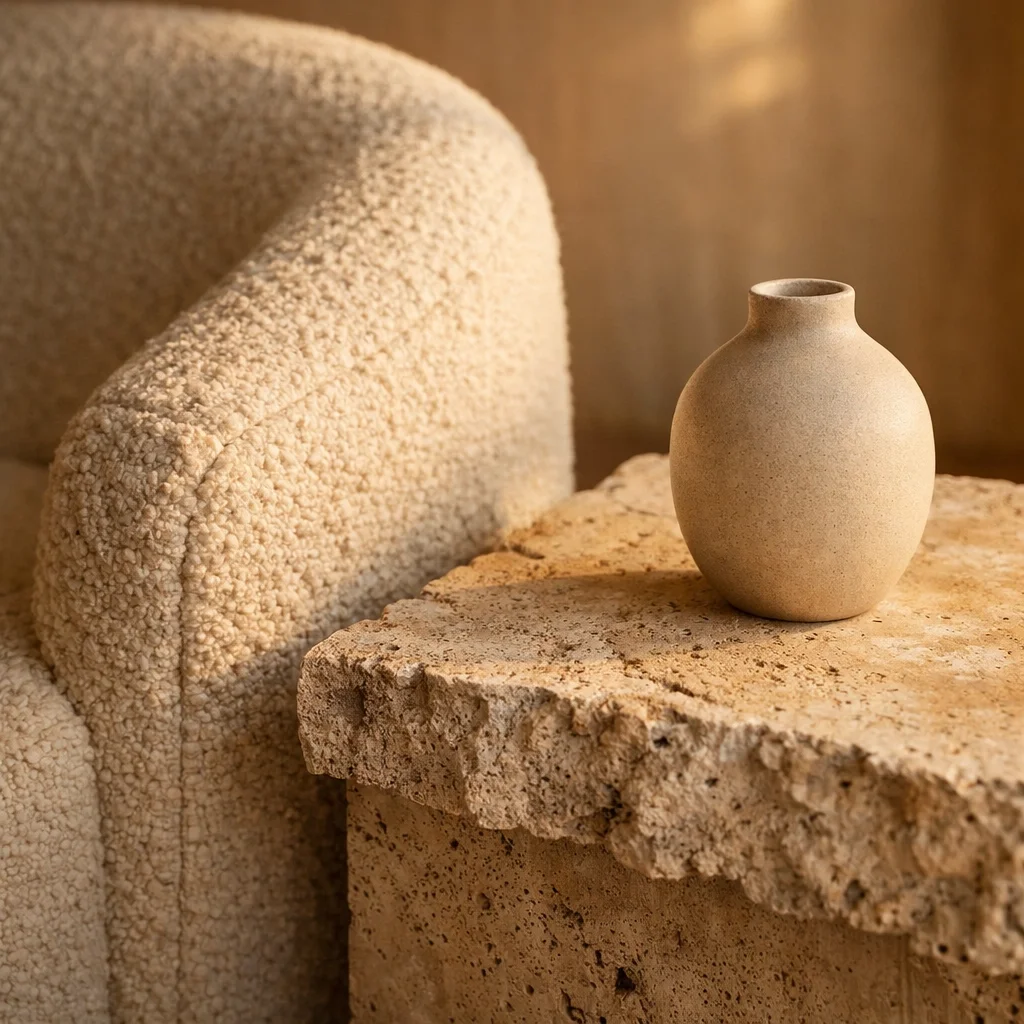
Collaborative Vision: The Marco Bell Photo Process
At Marco Bell Photo, we view our relationship with architects and designers as a partnership. We do not simply arrive and "shoot the room." Our workflow involves a pre-production consultation to understand the design intent. Which materials were the most difficult to source? Which corner of the room receives the most evocative afternoon light?
Our process includes:
On-site Material Review: Identifying the textures that define the project’s character.
Technical Execution: Utilizing advanced lighting techniques to prevent the "over-smoothed" digital look.
Refined Post-Production: Our editing process is additive, not subtractive. We aim to enhance the existing beauty of the materials, not replace them with digital approximations.
If you are looking to elevate your next project beyond the standard, we invite you to explore our blog for more insights or view our full portfolio.
Final Thoughts
In an era of AI-generated perfection and flat digital screens, the resurgence of tactility is a reminder of our fundamental need for physical connection. For the architectural community in South Florida, capturing this connection is the key to creating compelling, high-stakes marketing. By rejecting the "over-smoothed" look in favor of raw materiality, we don’t just take photos; we document the very essence of human design.
Whether you are marketing a waterfront estate or a boutique commercial space, remember: texture is the language of luxury. Let's speak it fluently.