From Blueprint to Legacy: How Architects Use High-End Imagery to Win Their Next Big Commission
![[HERO] From Blueprint to Legacy: How Architects Use High-End Imagery to Win Their Next Big Commission](https://images.squarespace-cdn.com/content/v1/65709c5d3811307fc2c8dc79/90ca0237-11d3-4255-9870-1361235fc0a8/8OMyAz70Dyp.webp)
For an architecture firm, the completion of a project is not merely the end of a construction phase; it is the birth of a marketing asset. While the physical structure stands as a testament to engineering and design, its life in the public consciousness: and its ability to generate future revenue: depends almost entirely on how it is visually documented. In the high-stakes world of luxury and commercial architecture, the transition from blueprint to legacy is paved with high-end imagery.
This article serves as a strategic roadmap for architecture firms looking to leverage professional photography as a tool for business growth. We will examine why editorial-grade visuals are essential for capturing first impressions, how technical precision in photography honors the architect’s original design intent, and the specific ways a robust legacy portfolio functions as a catalyst for winning high-value commissions.
Why is the "First Glance" the Most Critical Phase of Client Acquisition?
In a digitally-driven marketplace, a potential client’s first interaction with your firm is rarely at a building site; it is on your website or social media feed. According to industry research on visual marketing (2024), users form an opinion about a brand’s quality within approximately 50 milliseconds of viewing an image. For architects, this means that the craftsmanship of a multi-year project is judged in the blink of an eye.
High-end imagery does more than show a building; it establishes a unique visual signature. This signature defines your firm’s philosophy: whether that is a commitment to brutalist honesty, tropical modernism, or intricate historical restoration. When a developer or a private homeowner views a professionally curated portfolio, they are looking for a sense of reliability and excellence. Indeed, the perceived value of your services is inextricably linked to the quality of your presentation. If the photography is average, the architecture is perceived as average, regardless of its actual merit.
Furthermore, high-quality visuals foster an emotional connection. Architecture is an experiential art form, and professional photography uses light, shadow, and composition to evoke the feeling of standing within a space. This connection is what transforms a passive viewer into a prospective client.
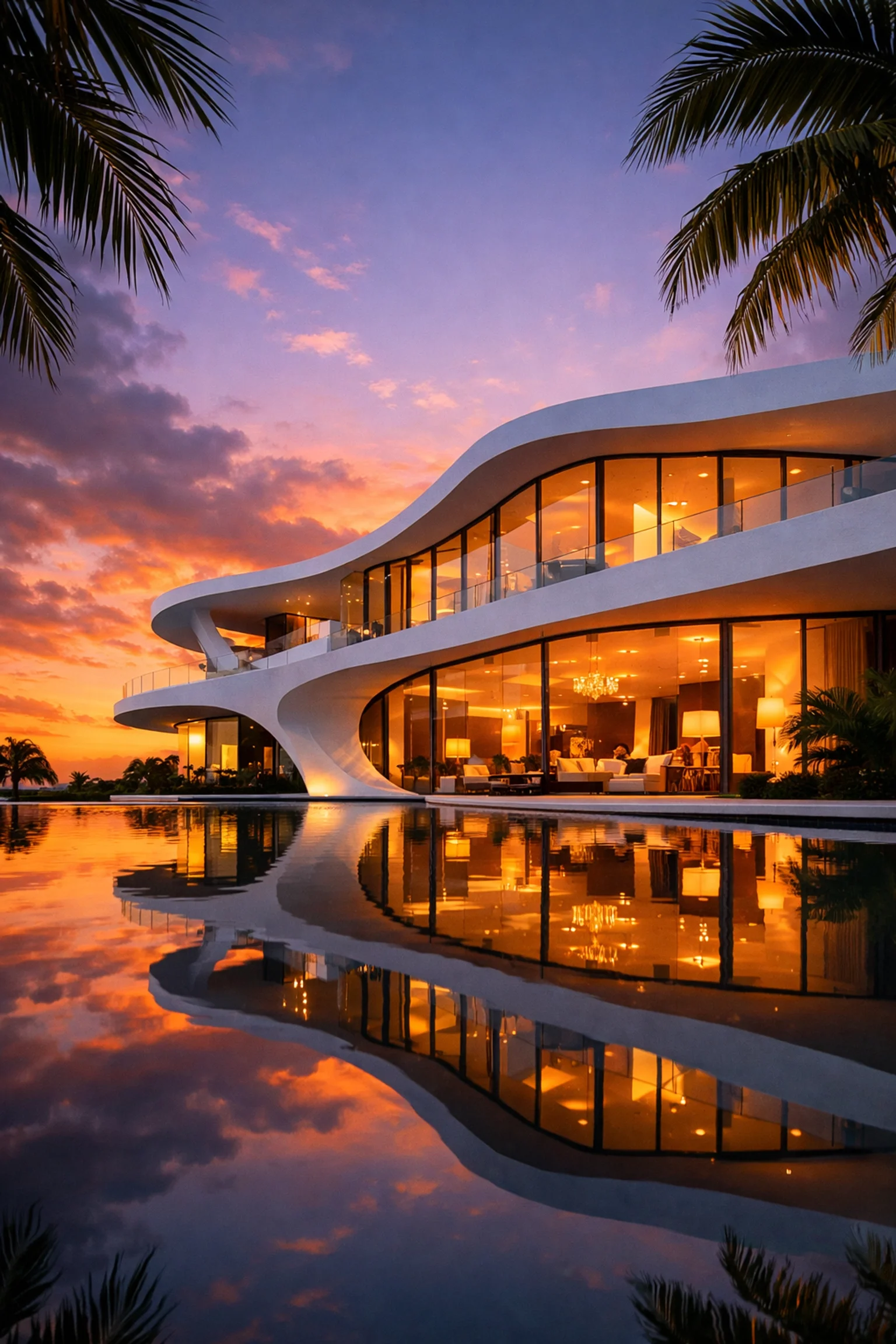
How Does Technical Precision Translate Into Design Authority?
Architects spend months, sometimes years, obsessing over the details: the way a shadow falls across a textured concrete wall, the precision of a mitered joint, or the seamless transition from interior flooring to an exterior terrace. Standard real estate photography often fails to capture these nuances, favoring wide-angle lenses that distort proportions and "blown-out" lighting that flattens materiality.
Professional architectural photography, by contrast, is an exercise in technical precision. It requires an understanding of:
Perspective Correction: Utilizing tilt-shift lenses to ensure vertical lines remains perfectly parallel, maintaining the structural integrity of the design in 2D form.
Materiality and Texture: Using specialized lighting to highlight the grain of wood, the coolness of marble, or the matte finish of steel.
Light Temperature: Balancing the warmth of interior tungsten lighting with the blue hues of twilight to create a balanced, inviting atmosphere.
By focusing on these technical aspects, a photographer becomes a documentarian of the architect’s design intent. This level of detail communicates to potential clients that your firm is meticulous. It demonstrates that you do not just build structures; you curate environments—and that distinction belongs in a portfolio that is built to win work (view our portfolio).
> Educational Sidebar: The Science of Visual Perception in Architecture
> Recent studies in neuro-aesthetics (2023) suggest that the human brain processes "balanced" architectural images: those adhering to the golden ratio and correct perspective: with higher levels of cognitive ease. This ease correlates directly with feelings of trust and professional competence.
What is the Strategic Value of a "Legacy Portfolio"?
A legacy portfolio is more than a collection of past works; it is a firm’s most persuasive sales pitch. Every high-end image captured is a reusable asset that serves multiple functions across the business lifecycle.
Securing Future Commissions: When bidding for a new project, an architect must prove they have the expertise to handle the specific scale and style requested. A portfolio filled with high-end imagery allows you to show, rather than tell, your capabilities.
Editorial and Award Submissions: Top-tier publications like Architectural Digest or Dezeen have stringent requirements for photography. Without editorial-grade visuals, even the most innovative designs are unlikely to receive the press coverage they deserve.
Brand Consistency: Maintaining a consistent visual style across your professional branding ensures that your firm remains top-of-mind for luxury brokers and developers—and makes it easier for decision-makers to evaluate your work quickly (see portfolio examples).
In South Florida, where the architectural landscape is exceptionally competitive, having a photographer who understands the local light and lifestyle is a prerequisite for building this legacy. If you want to assess fit quickly, start with the work itself (portfolio).

Why Should Firms Prioritize Environmental Narrative Over Simple Documentation?
There is a significant difference between documenting a building and telling its story. Simple documentation shows where the walls are; environmental narrative shows how the building lives. This is particularly important for projects that emphasize the indoor-outdoor lifestyle.
To capture this, a photographer must wait for the "hero moment": that brief window during "blue hour" where the interior lights glow warmly and the exterior sky retains a deep, saturated hue. This creates a sense of drama and aspiration. It allows a potential client to visualize the lifestyle that your architecture facilitates.
Additionally, incorporating drone photography can provide a macro perspective, showing how a building integrates into its surrounding landscape or urban fabric. This "contextual storytelling" is vital for large-scale commercial firms and luxury residential architects alike, as it proves the design's harmony with its environment.
How Do High-End Images Impact the Bottom Line?
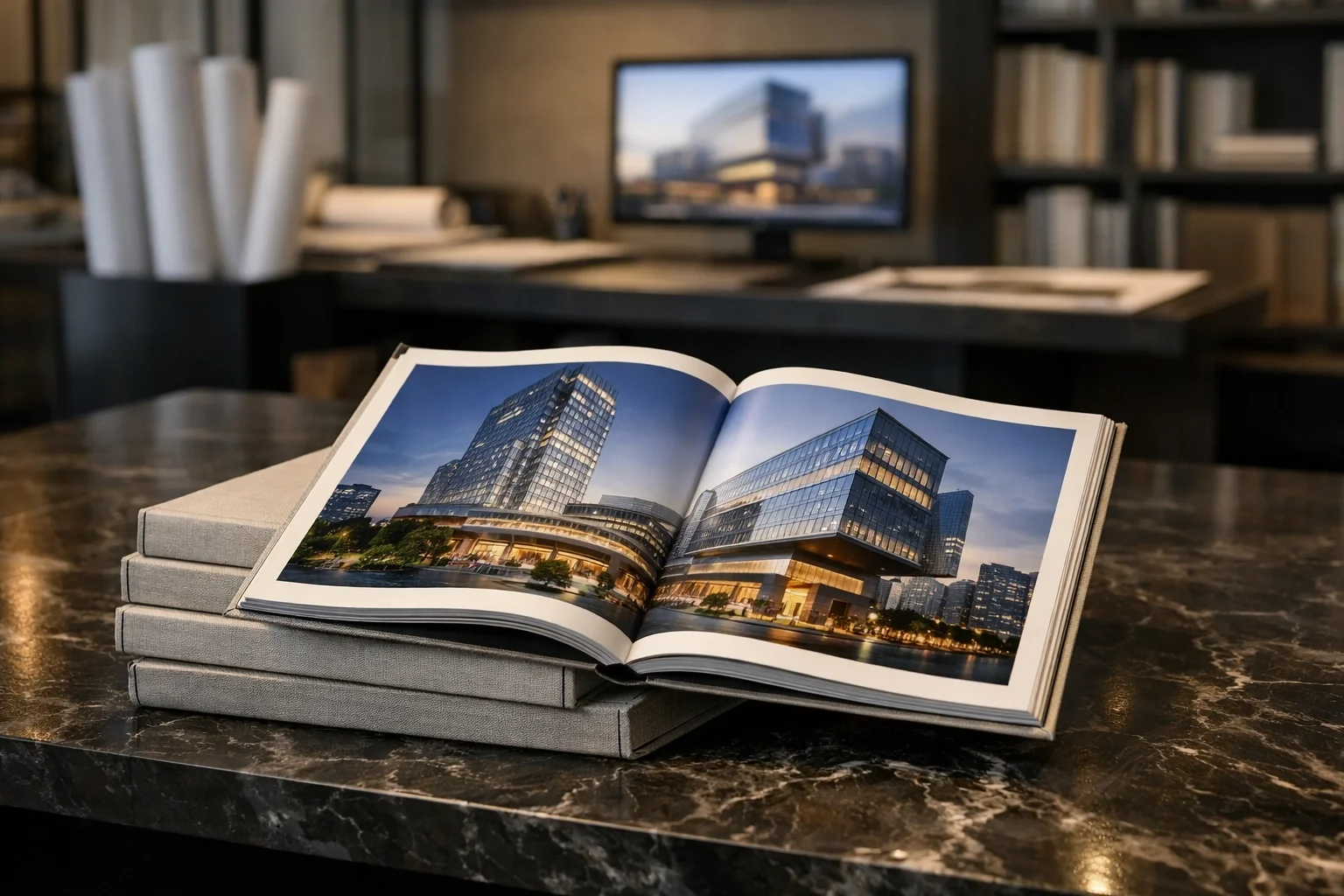
While the aesthetic benefits of professional photography are clear, the business outcomes are equally compelling. High-end imagery is a high-ROI investment. Consider the following breakdown:
Increased Win Rates: Firms with professional portfolios report a higher success rate in competitive RFP (Request for Proposal) processes.
Reduced Marketing Costs: A single high-quality photoshoot provides content for a website, multiple social media posts, print brochures, and award entries, reducing the need for constant content creation.
Higher Pricing Power: When your work is presented as a high-end luxury product, you can command fees that reflect that positioning.
Architects who view photography as an "expense" rather than an "investment" often find themselves trapped in a cycle of competing on price rather than value. In contrast, those who invest in luxury interior and architectural photography elevate their brand to a level where clients seek them out for their specific vision—and that positioning is easiest to validate through a cohesive body of work (portfolio).
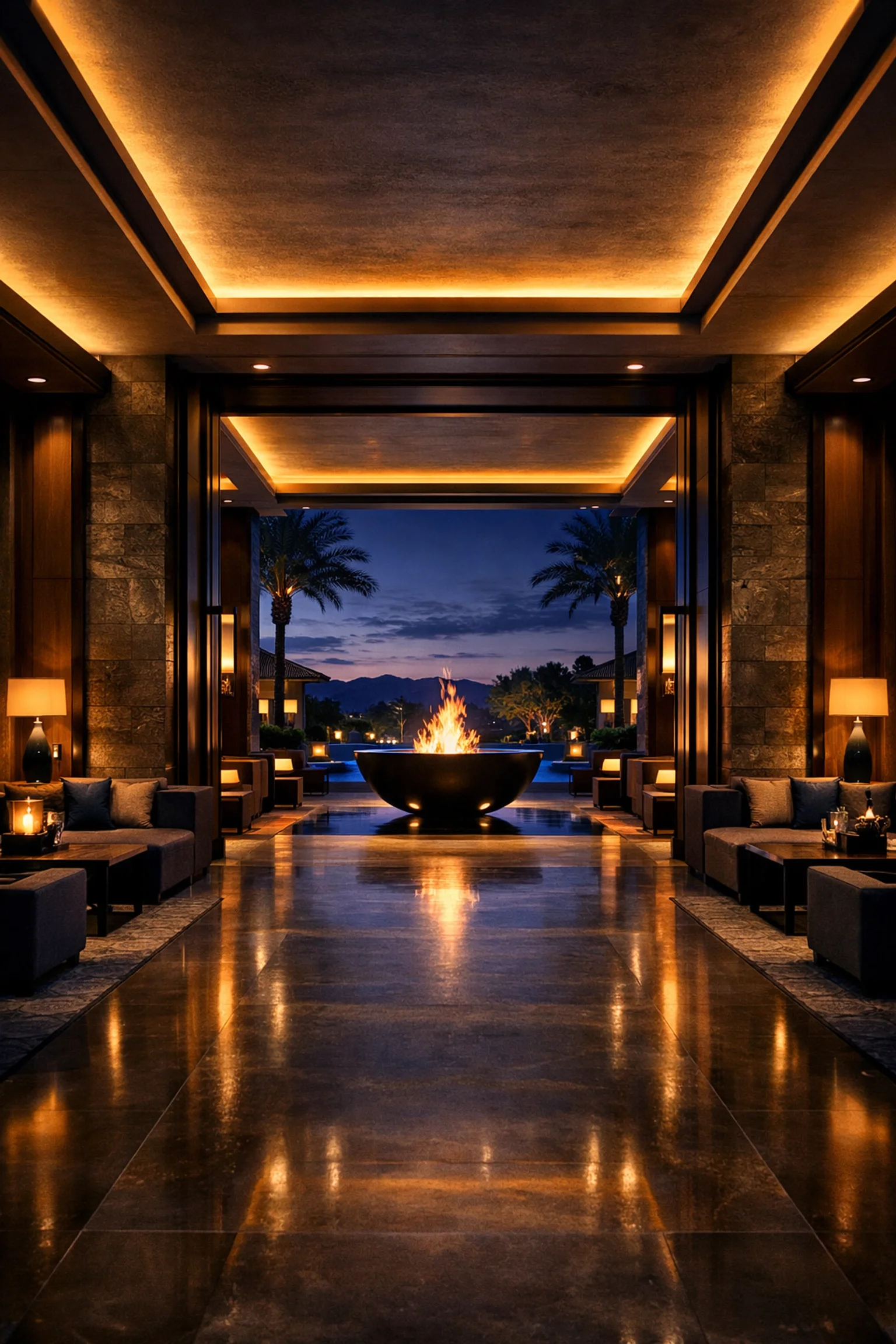
How Does a Collaborative Partnership Ensure Long-Term Success?
The best architectural photography is the result of a collaborative partnership between the architect and the photographer. This process begins long before the first shutter click. It involves:
The Pre-Shoot Walkthrough: Discussing the "hero" angles and the specific design elements that must be highlighted.
The Styling Phase: Deciding on the level of staging required to make the space feel lived-in but not cluttered.
The Post-Production Review: Ensuring that the final color grading and retouching align with the firm’s visual brand.
At Marco Bell Photo, we treat every project as a partnership. Our goal is to translate your three-dimensional achievements into a two-dimensional format that captures the soul of your design. We understand the technical demands of architectural visuals and the business necessity of a compelling portfolio—and we are happy to discuss scope, timelines, and deliverables (contact).
Conclusion
Your projects deserve more than a simple record of their existence; they deserve to be immortalized in a way that reflects their innovation and craftsmanship. By investing in high-end imagery, you are not just documenting the past: you are securing your firm’s future. You are building a legacy that will continue to win commissions and inspire clients long after the construction dust has settled.
If you are ready to elevate your firm’s portfolio and transform your completed projects into powerful marketing assets, we invite you to explore our work and discover how we can help you capture your next masterpiece.