Chasing the South Florida Light: The Science of Timing for Waterfront and Glass-Heavy Architecture
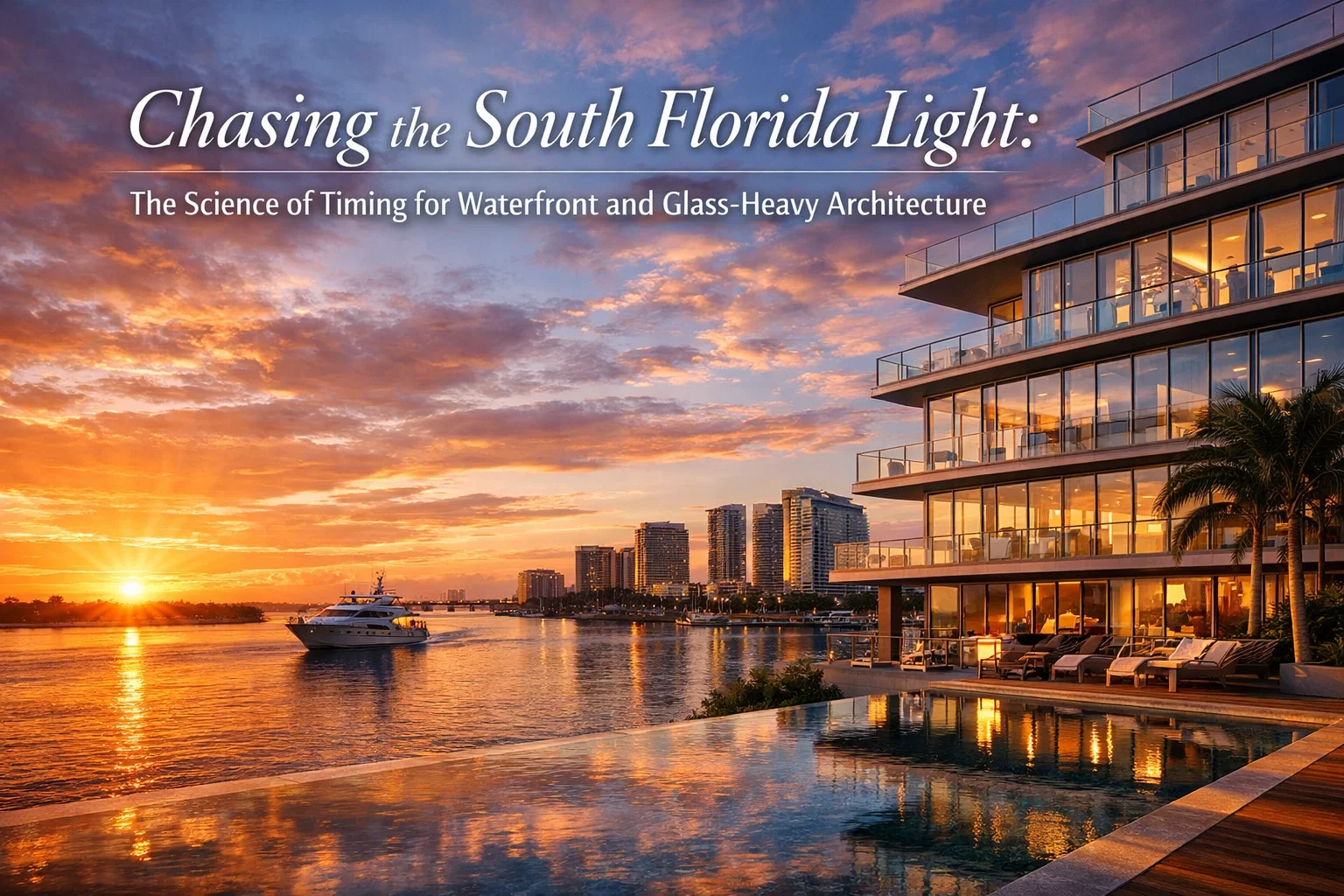
In the realm of high-end architectural photography, light is not merely a utility; it is a primary building material. In South Florida, where the interplay of water, glass, and sky defines the luxury landscape, the mastery of light timing is what separates a standard real estate snapshot from a compelling architectural narrative. This post serves as a strategic roadmap for architects, designers, and developers. We will examine the technical nuances of the solar path in subtropical latitudes, the optical physics of managing reflections on glass-heavy facades, and the specific methodologies used to document the seamless transition between interior and exterior spaces. Understanding these elements is essential for professionals who seek to translate their physical designs into high-fidelity visual assets that command market attention and build long-term brand equity.
Why Does Timing Dictate the Market Value of an Architectural Asset?
For the luxury market, the quality of a property’s digital representation is often the first point of contact for potential investors and clients. Indeed, the "vibe" of a space is a direct result of how light interacts with the volume and materials of the structure. When photography is scheduled without regard for solar orientation, the results are frequently compromised by harsh shadows, "blown-out" highlights, or flat, uninspired textures.
From a business perspective, the ROI of professional architectural photography lies in its ability to evoke an emotional response through technical precision. According to industry analysis by the Journal of Marketing Research (2022), high-quality visual content significantly influences the "perceived value" of luxury goods, often allowing for a premium price point. In architecture, this means capturing the structure during the specific minutes of the day when the light emphasizes the architect’s intent. For high-end Miami architecture, this window is incredibly narrow—and getting it right is exactly why many teams start by reviewing a photographer’s body of work on the portfolio page.
How Does the "Golden Hour" Function in Subtropical Latitudes?
The "Golden Hour": the period shortly after sunrise or before sunset: is a staple of the photographic industry. However, in South Florida, the science of this timing is influenced by the region’s high humidity and low elevation. The moisture in the air acts as a natural diffuser, scattering shorter wavelengths of light and emphasizing the warm, golden hues that characterize the tropical "magic hour."
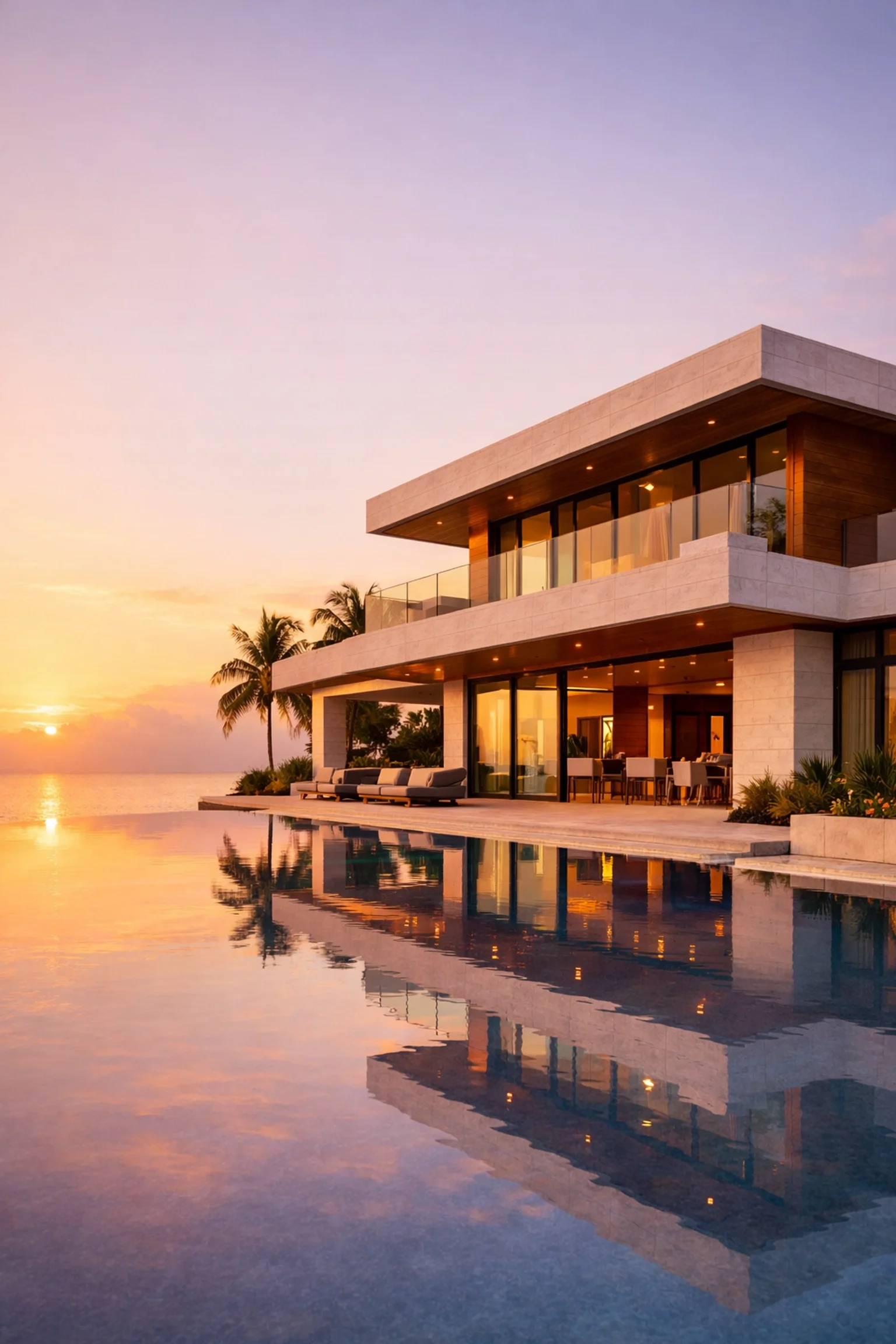
When documenting waterfront properties, timing is even more critical—and it’s one of the key variables we plan for on every project you’ll see in our portfolio.
The sun’s position relative to the water determines the degree of "specular reflection." If the sun is too high, the water appears flat or overly bright; if it is positioned correctly, the water reflects the sky's gradients, providing a serene and expansive backdrop that enhances the building's footprint. At Marco Bell Photo, we utilize solar tracking software to predict the exact angle of the sun weeks in advance, ensuring that the light hits the facade at an angle that reveals texture without creating distracting "hot spots" on reflective surfaces.
What are the Technical Challenges of Documenting Glass-Heavy Facades?
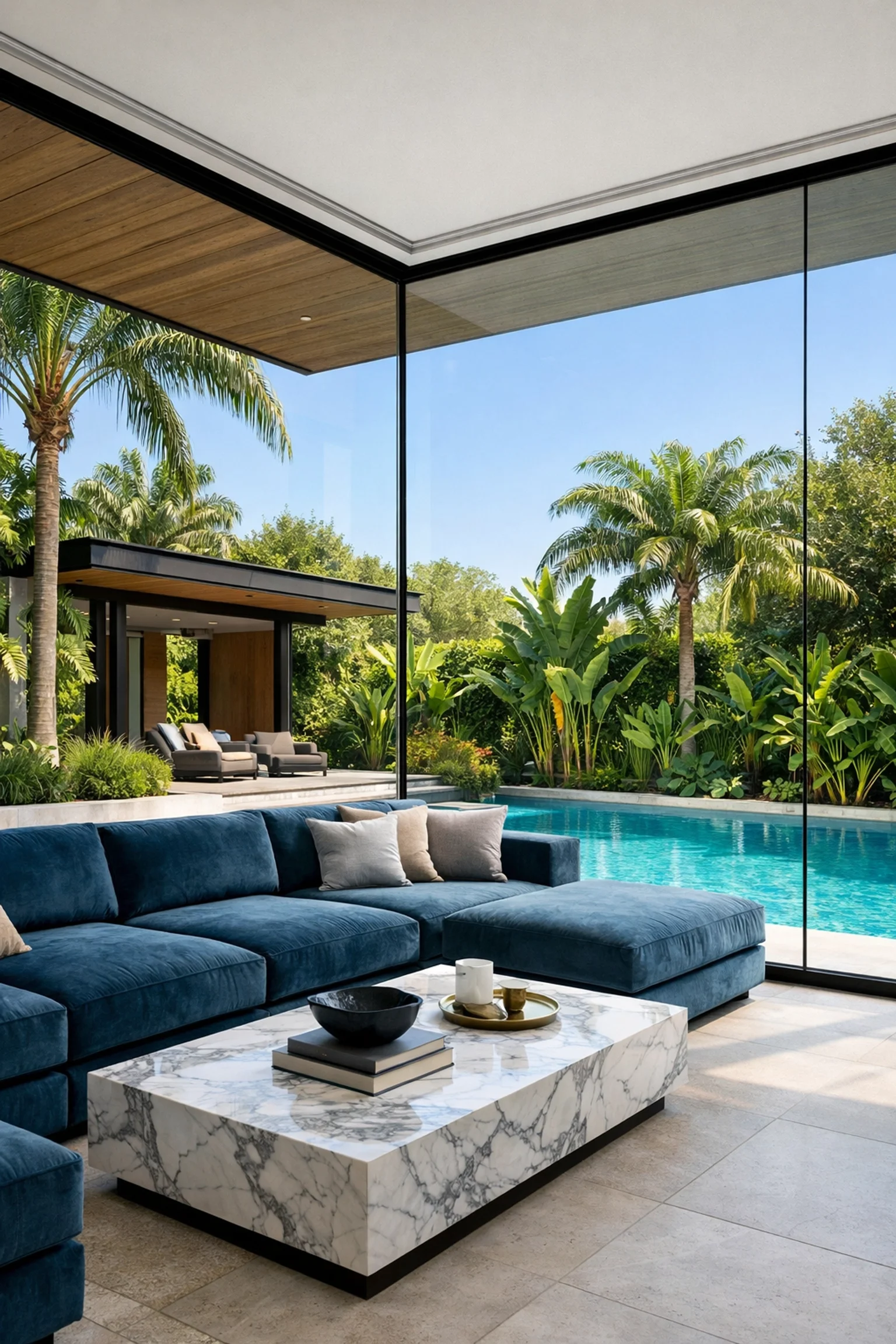
Modern South Florida architecture is defined by its transparency. Floor-to-ceiling windows and glass curtain walls are designed to invite the outside in. However, for a photographer, glass presents a significant hurdle: the "Angle of Incidence." According to the laws of physics, the angle at which light hits a surface is the same angle at which it reflects. In glass-heavy buildings, this can lead to unwanted reflections of camera gear, neighboring buildings, or the photographer themselves.
Furthermore, managing the "dynamic range": the difference between the brightest highlights outside and the darkest shadows inside: requires a sophisticated technical approach. We often employ a technique known as "Exposure Blending" or "Flambient" (a mix of flash and ambient light). This allows us to maintain the view through the glass (the "window pull") while ensuring the interior finishes are rendered with color accuracy and depth.
> Research Summary: High-Performance Glazing and Visual Documentation
> A 2023 technical paper in the "Architectural Science Review" noted that modern low-E (low-emissivity) glass coatings, while excellent for energy efficiency, introduce a slight blue or green tint to natural light. For client-facing interiors, this requires custom white balance calibration to ensure that the designer's selected color palette is not skewed by the glass's chemical properties—an approach reflected throughout our portfolio.
How Can We Capture the Seamless Flow Between Interior and Exterior Spaces?
The South Florida lifestyle is predicated on the "indoor-outdoor" transition. For a potential client, the terrace is as important as the living room. Capturing this flow requires more than just a wide-angle lens; it requires a deep understanding of spatial narrative.
To successfully document these transitions, we focus on the "Blue Hour": the short window of time after the sun has set but before the sky is completely dark. During this period, the ambient light of the sky balances perfectly with the interior artificial lighting. This balance creates a transparency in the glass that is impossible to achieve during the day. It allows the viewer to see the interior warmth and the exterior landscape simultaneously, reinforcing the design intent of a continuous living space.
Additionally, we pay close attention to the "materiality" of the transition. Whether it is the continuation of a stone floor from the kitchen to the pool deck or the way a cantilevered roof provides shade, the photography must highlight these functional details. This level of documenting design intent is what transforms a simple image into a tool for architectural legacy—and it’s a key standard we apply across every assignment in our portfolio.
The Strategic Importance of the "Twilight" Shot
While daytime shots provide clarity and a sense of "truth," the twilight shot is the "hero" image. It is the image that stops the scroll on social media and leads the feature article in an editorial publication. The science of timing the twilight shot involves a precise 15-to-20-minute window where the building’s interior lights have a color temperature of approximately 3000K, contrasting beautifully with the 10,000K deep blue of the sky.
This contrast creates a visual "pop" that is scientifically proven to draw the human eye. By highlighting the structure as a glowing beacon against the darkening landscape, we emphasize the safety, luxury, and exclusivity of the property. This is particularly effective for commercial and retail environments, where the goal is to create an inviting atmosphere that transcends the physical boundaries of the store or office—an outcome you can evaluate directly in our portfolio.
Collaboration and the Scientific Approach
At Marco Bell Photo, we view every shoot as a collaborative partnership. We do not simply "take photos"; we execute a pre-planned visual strategy. Our process typically follows this workflow:
Site Analysis: We evaluate the property's cardinal orientation and the surrounding environment (neighboring buildings, foliage, water bodies).
Solar Mapping: Using digital tools, we determine the optimal windows for each elevation of the building.
Lighting Coordination: We work with the site manager or designer to ensure all interior and exterior lighting is functioning and controllable.
On-Site Execution: We utilize high-resolution medium-format or full-frame systems to capture the maximum amount of data, ensuring the images are suitable for both large-scale print and digital marketing.
Post-Production: Our refined editing process focuses on color accuracy, reflection management, and perspective correction.
Conclusion: Investing in the Right Light
In the competitive landscape of South Florida real estate and design, your portfolio is your most valuable asset. The science of timing natural light is not just a technical detail; it is a fundamental component of effective interior design marketing—and a practical way to strengthen brand perception through consistent, high-fidelity visuals, as shown in our portfolio.
By understanding the behavior of light and the physics of glass, we can create images that do more than show a space: they sell a vision.
Whether you are looking to document a newly completed residential masterpiece or elevate your brand identity with expert photoshoots, the investment in professional timing and technique pays dividends in brand perception and market position—if you’re evaluating fit, start with the portfolio and then reach out via the contact page.
At Marco Bell Photo, we are committed to providing that editorial edge through a disciplined, scientific, and refined approach to architectural documentation.
To evaluate whether this approach matches your standards, review the portfolio and then use the contact page to discuss your next project.